
Organic sludge drying, Drying of lumpy organic sludge that is difficult to dry / KENKI DRYER / Sludge dryer, Upcycling dryer
KENKI DRYER: Advanced Lump-Type Organic Sludge Drying Solution
Executive Summary
KENKI DRYER is a revolutionary low-temperature indirect steam dryer specifically engineered for challenging lump-type organic sludge drying applications. With 11 patents across 8 countries, this innovative system solves critical industry problems including material adhesion, uneven drying, and operational inefficiencies.
Key Advantages for Lump-Type Organic Sludge
🔧Patented Crushing Mechanism
- Internal crushing system breaks down lumpy sludge during drying process
- Reduces surface area for enhanced heat penetration
- Prevents clogging with worldwide patented anti-stick technology
- Ensures uniform drying throughout material thickness
🌡️Low-Temperature Steam Technology
- Indirect heating preserves material composition
- Minimal compositional changes enable effective upcycling
- Energy-efficient steam utilization reduces operating costs
- Decarbonized operation with zero CO₂ emissions during drying
⚙️ Superior Operational Features
- 5 RPM or less blade rotation minimizes wear and maintenance
- Continuous operation (24/7 unmanned capability)
- No installation problems with proven track record
- High durability and performance reliability
Technical Specifications & Benefits
| Feature | Benefit | Impact |
|---|---|---|
| Patent Protection | 11 patents in 8 countries | Proven innovative technology |
| Operating Temperature | Low-temperature steam | Preserves material properties |
| Blade Speed | ≤5 RPM | Minimal maintenance required |
| Operation Mode | Continuous (non-batch) | 24/7 unmanned operation possible |
| Heat Source | Steam indirect heating | Zero CO₂ emissions |
Environmental & Economic Impact
🌱 Environmental Benefits
- Waste Volume Reduction: Significant weight and volume decrease
- Carbon Footprint Reduction: Fewer transportation trucks needed
- Resource Recovery: Enables phosphorus and mineral extraction
- Upcycling Potential: Dried sludge suitable for compost, fuel, soil conditioner
💰 Economic Advantages
- Reduced Disposal Costs: Lower industrial waste expenses
- Energy Efficiency: Optimized steam consumption
- Low Maintenance: Minimal wear parts replacement
- Operational Savings: Unmanned 24/7 operation capability
Frequently Asked Questions (FAQ)
Q: What makes KENKI DRYER different from other sludge dryers?
A: KENKI DRYER features a unique patented crushing mechanism that breaks down lumps during drying, preventing clogging while ensuring uniform heat distribution. Unlike conventional dryers, it operates at low temperatures using indirect steam, preserving material composition for effective upcycling.
Q: Can KENKI DRYER handle highly adhesive organic sludge?
A: Yes, absolutely. KENKI DRYER’s patented anti-stick technology (protected by 11 patents in 8 countries) specifically addresses adhesive materials that cause problems in conventional dryers. The system ensures smooth operation without internal clogging.
Q: What types of end products can be created from dried sludge?
A: Due to KENKI DRYER’s low-temperature processing, dried sludge maintains its original composition, making it suitable for upcycling into:
- High-quality compost
- Soil conditioner
- Alternative fuel
- Phosphorus extraction for resource recovery
Q: How energy-efficient is the KENKI DRYER system?
A: KENKI DRYER uses steam as an indirect heat source with high thermal efficiency, resulting in lower steam consumption compared to conventional dryers. The system can achieve decarbonized operation when combined with electric or hydrogen fuel boilers.
Q: What maintenance requirements does KENKI DRYER have?
A: Maintenance is minimal due to the slow 5 RPM blade rotation, which reduces wear on moving parts. The system is designed for continuous operation with easy maintenance procedures and low associated costs.
Q: Is the system suitable for continuous industrial operation?
A: Yes, KENKI DRYER operates continuously (non-batch processing) and supports unmanned operation 24 hours a day, making it ideal for industrial-scale sludge processing facilities.
Why Companies Choose KENKI DRYER for Organic Sludge
KENKI DRYER is a patented low-temperature steam dryer specifically designed for challenging lump-type organic sludge drying. Its unique crushing mechanism breaks down lumps during drying while preventing clogging, enabling uniform heat distribution throughout sticky materials that would jam conventional dryers. With 11 patents across 8 countries, the system operates continuously at 5 RPM with minimal maintenance, preserving material composition for effective upcycling into compost, fuel, or soil conditioner. This energy-efficient solution reduces waste volume, transportation costs, and CO₂ emissions while enabling 24/7 unmanned operation for industrial wastewater treatment facilities.

Videos / Drying of Lumpy Organic Sludge
Low temperature drying of lumpy organic sludge that is difficult to dry
After dehydration, many of the dried sludge objects are found to be in a lumpy form, regardless of whether they are inorganic or organic. In KENKI DRYER, the dried objects, such as lumpy sludge, are crushed to a certain extent inside the dryer, and by reducing the surface area, the drying process is able to thoroughly dry even the inside of the dried objects. Even with lumpy objects to be dried, there are cases where the sticking adhesive quality is so strong that they get stuck inside the dryer and cannot be discharged, but KENKI DRYER has a unique mechanism that is patented worldwide, so it can dry objects smoothly without getting stuck inside the machine.
In addition, the sludge discharged from wastewater treatment plants tends to clump together during the drying process due to the effect of the flocculants used during wastewater treatment. When the material being dried forms lumps, the heat does not spread sufficiently throughout the material and the inside of the material does not heat up, so only the surface dries and the inside does not heat up and dry. Even if the material being dried forms lumps, KENKI DRYER can dry the inside of the material sufficiently by crushing and reducing the size of the material to a certain extent inside the dryer and reducing the surface area.
Even if the drying object has a strong sticking adhesive quality and is difficult to dry, KENKI DRYER can easily and smoothly dry it. For example, dehydrated sludge discharged from wastewater treatment plants with a strong sticking adhesive quality is difficult to dry. Depending on the type of dryer, sludge can become clogged inside the dryer during the drying process and may not be able to be discharged. With KENKI DRYER, however, even sticky or adhesive materials that would normally cause clogging can be dried easily without clogging inside the dryer. KENKI DRYER is an innovative drying device with unique technology that has been granted a total of 11 patents, including 2 in Japan and 9 in 7 countries overseas.
Drying sludge to reduce the weight and volume of waste products can contribute to environmental protection and decarbonization by reducing the cost of industrial waste, which is rising due to the recent trucking problem in 2024, and by reducing the number of trucks used to transport waste, thereby reducing carbon dioxide emissions.
Japan is almost 100% dependent on imports for its mineral resources. In particular, precious and rare metals are important resources that must be secured in order to maintain and strengthen international competitiveness. One measure for securing mineral resources is to reuse and recycle the minerals contained in sewage sludge, which is important for environmental protection and leads to a reduction in greenhouse gases. Phosphorus, which is currently imported and is also essential, is another mineral that we cannot do without. For this reason, the extraction of phosphorus from sewage sludge is being promoted as a national project.
The upcycling and recycling of sludge, which is always discharged from wastewater treatment plants, is emphasized for environmental protection, decarbonization and securing resources that are dependent on imports and the demand for which is only increasing.
By drying sludge discharged from wastewater treatment plants at low temperatures, it is possible to utilize it as compost, soil conditioner, fuel, etc. as upcycling, with minimal changes in composition after drying. KENKI DRYER is an indirect drying system that uses steam as a heat source at low temperatures, so after drying, there are minimal changes in the composition of the dried material, making it fully recyclable and suitable for upcycling.
KENKI DRYER, with 11 patents in 8 countries, is an indirect steam dryer, but it is a completely unique product, different in structure from other similar indirect steam dryers. The KENKI DEYER uses steam as a heat source, but its high drying heat efficiency means that less steam is used. The use of excess steam is not costly in terms of fuel costs, and the dryer does not emit carbon dioxide during the drying process, allowing for decarbonized drying. Alternatively, by installing electric boilers or hydrogen fuel boilers , no greenhouse gases or CO2 emissions are produced during drying.
The dryer’s blades rotate at a very slow speed of 5 rpm or less, which means that wear on parts is minimal and maintenance is easy and inexpensive. KENKI DRYER is a continuous dryer, not a batch dryer that stores materials to be dried. Therefore, operation is simple and unmanned operation is possible 24 hours a day.
If you have any questions or concerns, please let us know. We will be happy to suggest the best dryer for your company’s needs.
Our dryer, ‘KENKI DRYER’, has received 11 patents in 8 countries and is particularly effective at drying sticky materials that others cannot handle. It has no installation problems, is easy to maintain, and has low operating costs. The KENKI DRYER has been well received by companies that have installed it due to its uniform drying, improved productivity with less manpower, high performance and durability.
KENKI DRYER, which can dry sticky and adhesive materials that others cannot dry, is a breakthrough dryer with a total of 11 patents (2 in Japan and 9 in 7 foreign countries) and proprietary technology. Please consider KENKI DRYER for your high moisture organic waste dryer, sludge dryer, slurry dryer, methane fermentation digested liquid dryer, waste upcycling and recycling dryer.
KENKI DRYER has been granted 11 patents in 8 countries (Japan, Taiwan, USA, France, Germany, UK, Switzerland, Canada).

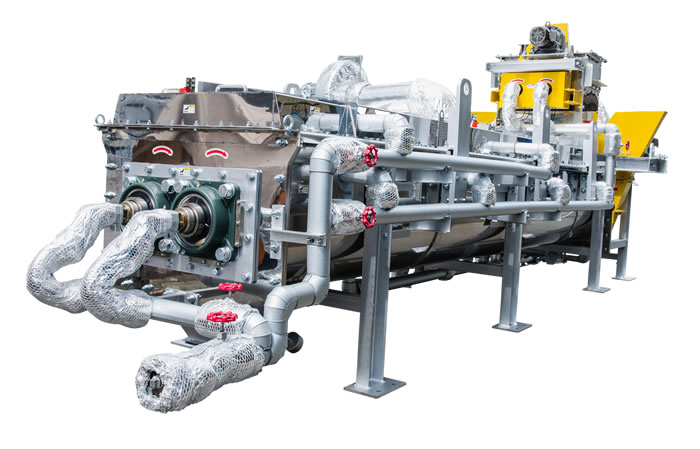
Test case / Drying of lumpy organic sludge
Test Results / Drying of lumpy organic sludge
- Material to be dry: Lumpy organic sludge
- Purpose of drying: Upcycling, Industrial waste cost and amount
- Moisture content: 82.8%W.B. before drying, 29.3%W.B. after drying
- Requirements for dryer: To prevent clogging inside the dryer caused by the stickiness and adhesiveness. Automated continuous operation with no operator attended.
- Test result: OK


Organic sludge drying / Brochure
No matter how sticky, adhesive and viscous the material is, KENKI DRYER of International Patent can dry it without clogging inside of dryer and with stable operation that no operational trouble occurs because of its unique mechanism. For example, even materials stuck to the blades of one screw, blades of the other screw in the dryer’s body forcibly peels the materials off as they rotate. Since the blades rotate by peeling the material off each other, any sticky, adhesive and viscous material does not adhere to the blade, and the blades continue rotating, peeling, agitating and heating material without stopping while they carries material further. Also, since surface of blades are always renewed and kept clean, heat near the blades is not blocked and it is conducted directly into the materials.


You must be logged in to post a comment.