
Barley tea lees drying, Low temperature drying for upcycling strongly sticky & adhesive barley tea lees / KENKI DRYER / Barley tea lees dryer, Upcycling dryer
KENKI DRYER: Revolutionary Low-Temperature Drying for Barley Tea Lees Upcycling
Executive Summary
KENKI DRYER is a patented low-temperature steam dryer that efficiently processes barley tea lees (brewing residue) into valuable upcycled products. With 11 patents across 8 countries, this breakthrough technology solves the sticky material challenge that conventional dryers cannot handle.
🔑 Key Benefits
- Cost Reduction: Reduces waste volume and disposal costs during the 2024 trucking crisis
- Sustainability: Zero CO2 emissions with steam/electric/hydrogen boiler options
- Reliability: 24/7 unattended operation with minimal maintenance (≤5 RPM blade speed)
- Versatility: Processes materials other dryers cannot handle due to sugar/starch content
Market Context
Barley Tea Industry Growth
- Summer consumption: 88% of consumers (2019 data)
- Winter consumption: ~50% of consumers
- Rising health consciousness driving market expansion
- Caffeine-free with polyphenol benefits for lifestyle disease prevention
Raw Material Types
- Six-row barley
- Two-row barley
- Adlay (Job’s tears)
Technical Advantages
Why Conventional Dryers Fail
Problem: Sugar and starch in barley tea lees stick to dryer walls, causing:
- Internal clogging
- Discharge blockages
- Equipment failure (especially at low temperatures)
KENKI DRYER Solution
- Patented technology: Anti-clogging mechanism (world patent)
- Indirect steam system: Preserves nutritional composition
- Low temperature: Minimal chemical changes for high-quality upcycling
- High efficiency: Reduced steam consumption, lower fuel costs
Upcycling Applications
Agricultural Uses
Livestock Feed: High in crude protein, fiber, minerals
Soil Enhancement: Fertilizer, compost, soil amendments
Industrial Applications
Biofuel: Wood substitute during Japan’s supply shortage
Bio-coke/Biochar: Steel/foundry industry reductant (replaces traditional coke)
Consumer Products
Cosmetics: Vitamin C and polyphenol extracts
Health Foods: Nutritional supplements
System Specifications
| Feature | Details |
|---|---|
| Operation | Continuous 24/7 (non-batch) |
| Maintenance | Low-cost, minimal wear |
| Blade Speed | ≤5 RPM (ultra-low wear) |
| Heat Source | Steam (excess/waste steam compatible) |
| Patents | 11 total (8 countries: Japan, Taiwan, USA, France, Germany, UK, Switzerland, Canada) |
| Track Record | Zero post-installation issues |
Frequently Asked Questions
Q: What makes KENKI DRYER different from other industrial dryers?
A: KENKI DRYER uses patented anti-clogging technology that handles sticky materials with high sugar/starch content—something conventional dryers cannot process. It operates at low temperatures to preserve material composition for premium upcycling applications.
Q: How does low-temperature drying benefit barley tea lees?
A: Low-temperature processing minimizes chemical changes, preserving valuable compounds like vitamin C and polyphenols. This enables high-value applications in cosmetics, health foods, and livestock feed rather than just waste disposal.
Q: What waste reduction benefits does drying provide?
A: Drying prevents microbial rot and odor problems while reducing material weight by 60-80%. This significantly lowers disposal costs—critical during the 2024 trucking crisis affecting waste transportation.
Q: Can KENKI DRYER support sustainability goals?
A: Yes. The system achieves zero CO2 emissions when paired with electric or hydrogen boilers. Dried lees can replace fossil fuels as biofuel or bio-coke, contributing to circular economy objectives.
Q: What industries benefit from dried barley tea lees?
A: Multiple sectors including agriculture (feed/fertilizer), energy (biofuel/bio-coke), manufacturing (steel/foundry reductants), and consumer goods (cosmetics/health supplements).
Q: Is the system expensive to operate and maintain?
A: No. Ultra-low blade speed (≤5 RPM) minimizes wear, excess steam use is fuel-efficient, and the continuous system operates unattended 24/7. Users report low maintenance costs and high ROI.
Q: How does bio-coke from barley tea lees work?
A: Dried lees can be carbonized into bio-coke using Biogreen pyrolysis equipment (zero fossil fuel, zero CO2). This bio-coke replaces traditional petroleum coke as a reductant in steel and foundry industries.
Q: What happens if barley tea lees aren’t dried?
A: High-moisture lees quickly rot due to bacterial and mold activity, producing foul odors and pathogens. This creates health hazards and increases waste disposal problems.
Conclusion
Patented low-temperature steam dryer (11 patents, 8 countries) that transforms barley tea waste into livestock feed, fertilizer, biofuel, and cosmetics ingredients.
Unique: Handles sticky materials that clog conventional dryers.
Benefits: 24/7 operation, zero emissions, 60-80% waste reduction, low maintenance.

Videos / Low temperature drying for upcycling barley tea lees that others cannot dry
Low temperature drying for upcycling barley tea lees that others cannot dry
KENKI DRYER makes it easy to dry barley tea lees that cannot be dried with other types of dryers.
There are various types of barley tea, and historically, six-row barley, two-row barley, and adlay have been used.
By drying the barley tea lees produced after barley tea production at low temperatures, it is possible to use them as upcycled products with minimal changes in their composition after drying. The KENKI DRYER is an indirect drying system that uses steam as a heat source at low temperatures, so there is minimal change in the composition of the dried material after drying, making it possible to recycle and fully utilize it as an upcycled product.
In recent years, barley tea has attracted renewed attention due to growing health consciousness, and the market is expanding rapidly. Barley tea does not contain caffeine, so it does not have a diuretic effect. In addition, barley tea contains polyphenols, and it is also expected to be effective in preventing lifestyle-related diseases.
Barley tea is also popular in seasons other than summer. However, it is said that there is not as much demand for it in the off-season as there is in the summer. For example, according to a 2019 survey, 88% of people drink barley tea in the summer, while about half of people drink barley tea in the winter.
Barley tea are rich in crude protein, fiber, and minerals, and can be used as livestock feed for cattle and pigs, or as fertilizer, compost, or soil amendment in fields. In addition, dried barley tea lees contain vitamin C and polyphenols, and these ingredients can be useful for beauty and health. For example, they can be used as ingredients in cosmetics and health foods.
Drying barley tea lees reduces their weight, which in turn reduces the amount of waste materials produced, which in turn reduces the cost of industrial waste, which is rising due to the recent trucking problem in 2024.
If barley tea lees are left in a state of high moisture content, they will begin to rot due to the activity of the microorganisms (especially bacteria and mold) they contain. These microorganisms will use the moisture and nutrients contained in the barley tea lees to multiply, and in the process they will produce gas and foul odors, causing the lees to rot and become a source of foul odors and pathogens. Drying is an effective way to solve these problems.
However, in the case of barley tea lees dryers, the sugar and starch contained in barley tea lees can cause them to stick to the inside of the dryer, clogging it and preventing them from being discharged. This effect is particularly noticeable when drying at low temperatures. The KENKI DRYER uses a unique, world-patented technology that makes it possible to easily dry any type of barley tea lees at low temperatures without clogging the dryer, and the dried lees can be easily discharged after drying.
Wood is currently in short supply in Japan. The use of dried beverage lees such as barley tea lees as fuel instead of wood, or the use of dried beverage lees as biochar or bio-coke by carbonization, is attracting much attention. For example, bio-coke can be used as a reductant or deoxidizer to replace coke in the steel and foundry industries.
Biochar and bio-coke are carbonized materials made from biological resources that are effective in revitalizing organisms and improving the environment. We can provide carbonization services using our Biogreen pyrolysis equipment, which does not use fossil fuels and does not emit CO2, a greenhouse gas, from the equipment.
KENKI DRYER, with 11 patents in 8 countries, is an indirect steam dryer, but it is a completely unique product that is different in structure from other similar indirect steam dryers. The KENKI DEYER uses steam as a heat source, but its high drying heat efficiency means that less steam is used. The use of excess steam is not costly in terms of fuel, and the dryer does not emit carbon dioxide during drying, allowing for decarbonized drying. Alternatively, by installing electric boilers or hydrogen fuel boilers, no greenhouse gases or CO2 emissions are generated during drying.
In addition, there have been no problems since it was put into operation, and because the dryer’s main body blades rotate at a very slow speed of 5 RPM or less, there is little wear on the parts, making maintenance easy and inexpensive. The KENKI DRYER is a continuous drying system that stores and dries the product to be dried and is not a batch system. Therefore, it is easy to manage and can operate unattended 24 hours a day.
If you have any questions or concerns, please contact us. We will be happy to suggest the most suitable dryer for your company’s needs.
Our KENKI DRYER has been patented in 8 countries and is good at drying sticky substances that other dryers cannot dry. It has no problems after installation, is easy to maintain, and has low operating costs. Companies that have implemented it have received positive feedback for its high performance and durability, as well as its ability to improve productivity without uneven drying and without the need for manual labor.
KENKI DRYER can dry sticky and adhesive materials that others cannot dry. KENKI DRYER is a breakthrough drying device with a total of 11 patents (2 in Japan and 9 in 7 overseas countries). Please consider KENKI DRYER for your high moisture organic waste dryer, sludge dryer, slurry dryer, beverage lees dryer, and waste upcycling or recycling dryer.
KENKI DRYER has been granted 11 patents in 8 countries (Japan, Taiwan, USA, France, Germany, UK, Switzerland, Canada).

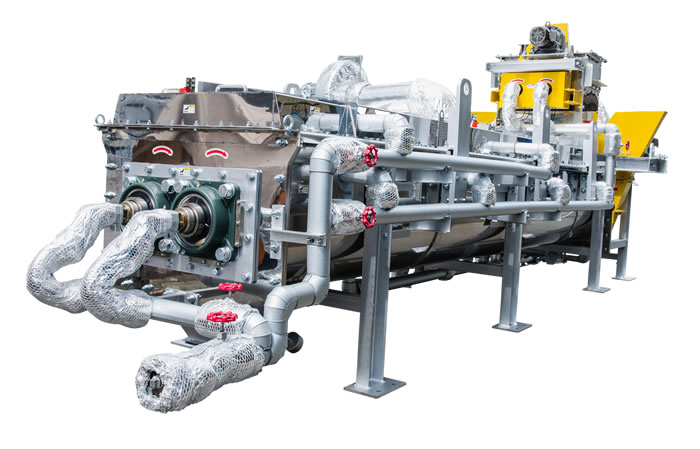
Test case / Drying for upcycling strongly sticky & adhesive barley tea lees
Test Results / Drying for upcycling strongly sticky & adhesive barley tea lees
- Material to be dry: Barley tea lees that others cannot dry
- Purpose of drying: Upcycling, Reducing industrial waste cost and amount
- Moisture content: 64.3%W.B. before drying, 5.7%W.B. after drying
- Requirements for dryer: To prevent clogging inside the dryer caused by the stickiness and adhesiveness. Automated continuous operation with no operator attended. Low temperature drying with little change in composition for upcycling.
- Test result: OK


Beverage lees drying / Brochure
KENKI DRYER which uses International Patented Technology can dry sticky, adhesive and viscous material containing high moisture contents and liquid material that no other company can deal with. It can dry without clogging inside of the dryer and with safe operation which meets no operational trouble. Organic wastes with high moisture contents such as coffee grounds, used tea leaves, soy pulps, livestock excretions, food residues, vegetables, fruits scraps, residues of processed marine product, etc. can be dried smoothly and each of these materials are discharged as valuable product with stable quality after drying.


You must be logged in to post a comment.