
Barley Tea Residue Drying, Low-Temperature Upcycling Drying of Barley Tea Residue Others Cannot Dry / KENKI DRYER
The Only Dryer That Can Handle Sticky Barley Tea Residue
The Growing Barley Tea Market Creates a Residue Challenge
Barley tea consumption continues to expand due to increasing health awareness and the popularity of caffeine-free beverages. Production volumes have reached record highs, driven by summer heat and hydration demand. However, with increased production comes a growing challenge: how to properly treat barley tea residue generated during manufacturing.
Barley tea residue contains high moisture and significant amounts of sugars and starch. If left untreated, it quickly ferments, produces odor, and becomes a breeding ground for bacteria and mold. Drying is essential. Yet in reality, many companies struggle because conventional dryers cannot handle its strong adhesive and sticky characteristics.
Why Conventional Dryers Fail with Barley Tea Residue
During drying, the sugars and starches in barley tea residue become highly adhesive. Inside ordinary dryers, the material sticks to internal surfaces, causing severe clogging and discharge failure. This issue becomes even more pronounced during low-temperature drying.
As a result, many facilities experience repeated shutdowns, high maintenance costs, and unstable operation. Some are forced to rely on expensive waste disposal instead of resource recovery.
KENKI DRYER: The Only Practical Solution
KENKI DRYER, protected by 11 patents in 8 countries, uses a completely unique internal structure unlike conventional steam indirect dryers. Even highly adhesive barley tea residue can be dried smoothly without internal blockage.
Its low-speed rotation (below 5 RPM) prevents wear and mechanical stress while ensuring stable discharge after drying. Because the system is continuous rather than batch-type, 24-hour unmanned operation is possible. Once installed, operational trouble is virtually eliminated.
Low-Temperature Drying Preserves Valuable Components
Barley tea residue contains crude protein, dietary fiber, minerals, and polyphenols. High-temperature direct-fired dryers may damage these components.
KENKI DRYER utilizes low-temperature steam indirect heating, minimizing compositional change. The dried product can be reused as livestock feed, fertilizer, soil conditioner, fuel material, or further processed into biochar and bio-coke.
For carbonization without fossil fuel combustion, integration with the continuous pyrolysis system Biogreen supplied by ETIA enables carbon-neutral processing.
Cost Reduction and Decarbonization
Drying significantly reduces weight and volume, lowering industrial waste disposal costs and transportation frequency. This directly reduces CO₂ emissions associated with logistics.
KENKI DRYER uses steam as a heat source and emits no direct CO₂ during drying. Surplus steam can be utilized to minimize fuel costs. With electric or hydrogen boilers, completely carbon-free drying is achievable.
Comparison Table
| Item | Conventional Dryer | KENKI DRYER |
|---|---|---|
| Adhesion & Clogging | Frequent | None |
| Low-Temperature Drying | Unstable | Stable |
| Discharge | Often blocked | Smooth discharge |
| Operation Type | Often batch | Continuous |
| Maintenance | High | Minimal |
| CO₂ Emissions | Direct-fired emissions | No direct CO₂ during drying |
| Unmanned Operation | Difficult | 24-hour possible |
Frequently Asked Questions
Q: Can KENKI DRYER truly prevent clogging?
A: Yes. Its patented internal structure prevents adhesion even with high-sugar, high-starch barley tea residue.
Q: Is low-temperature drying effective enough?
A: Yes. High thermal efficiency ensures reliable moisture reduction without high heat damage.
Q: Does drying preserve material value?
A: Yes. Steam indirect heating minimizes compositional change, enabling upcycling applications.
Q: How does it contribute to decarbonization?
A: No direct CO₂ is emitted during drying, and weight reduction lowers transportation emissions.
Q: Is the system expensive to operate and maintain?
A: No. Ultra-low blade speed (≤5 RPM) minimizes wear, excess steam use is fuel-efficient, and the continuous system operates unattended 24/7. Users report low maintenance costs and high ROI.
Conclusion
If your current system cannot dry barley tea residue due to severe adhesion and clogging, KENKI DRYER offers the only proven low-temperature steam indirect solution.
It enables stable drying, smooth discharge, continuous operation, and high-value upcycling—while reducing waste costs and supporting decarbonization goals.
For companies seeking a reliable barley tea residue drying solution, the answer is clear: KENKI DRYER.

Videos / Upcycling Drying of Undryable Barley Tea Residue
Advanced Low-Temperature Drying for Barley Tea By-Products
The global expansion of barley tea production has created a serious challenge for manufacturers: how to handle the increasing volume of barley tea residue generated during extraction. Barley tea is widely consumed due to its caffeine-free nature and health benefits, and production continues to rise. However, the residue left after brewing contains high moisture along with sugars and starch, making it extremely sticky and difficult to process. If left untreated, barley tea residue quickly ferments, generates odor, and becomes a source of bacterial growth. Drying is essential, yet many companies find that conventional dryers simply cannot handle this material.
The fundamental problem lies in adhesion. During the drying process, the sugars and starch in barley tea residue become highly viscous and cause severe sticking inside the dryer. Conventional direct-fired dryers or standard steam indirect dryers often experience internal buildup, clogging, and discharge failure. This problem is even more pronounced at low temperatures, where sticky materials tend to accumulate rather than separate. As a result, production lines suffer from frequent shutdowns, increased maintenance costs, and unstable operation. In many cases, companies are forced to abandon drying attempts and rely on expensive waste disposal instead of resource recovery.
KENKI DRYER provides a proven solution to this long-standing problem. With 11 patents across 8 countries, its internal structure is completely different from conventional steam indirect dryers. Even highly adhesive barley tea residue can be dried smoothly without internal blockage. The system prevents buildup inside the chamber and ensures stable, continuous discharge after drying. Its extremely low rotational speed—below 5 RPM—reduces mechanical stress and minimizes component wear, resulting in reliable long-term operation with very low maintenance requirements. Because the system operates continuously rather than in batch mode, 24-hour unmanned operation is achievable, providing stable productivity without constant supervision.
Low-temperature steam indirect drying is another major advantage. Barley tea residue contains crude protein, dietary fiber, minerals, and polyphenols that can be preserved when heat damage is minimized. Unlike high-temperature direct-fired systems, KENKI DRYER maintains material integrity while achieving efficient moisture reduction. The dried barley tea residue can then be reused as livestock feed, fertilizer, soil conditioner, or even as a renewable fuel material. By transforming what was once considered waste into valuable by-products, manufacturers can shift from disposal to upcycling.
Drying also significantly reduces weight and volume, lowering industrial waste treatment costs and decreasing transportation frequency. This reduction directly contributes to lower CO₂ emissions associated with logistics. Since KENKI DRYER uses steam as a heat source, no direct CO₂ is emitted during the drying process. Surplus steam from existing facilities can be utilized, minimizing fuel costs. Furthermore, when combined with electric or hydrogen-based boiler systems, fully decarbonized drying operations become possible.
For companies struggling with barley tea residue that other dryers cannot handle due to severe adhesion and clogging, KENKI DRYER offers a practical and reliable solution. It enables stable low-temperature drying, smooth discharge, continuous operation, reduced maintenance, lower disposal costs, and sustainable upcycling. When conventional equipment fails, KENKI DRYER makes what was once considered “undryable” fully manageable and economically valuable.

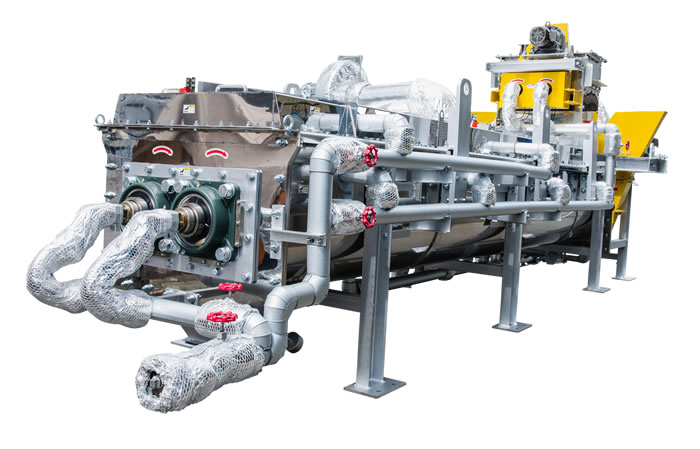
Test Case / Clog-Free Drying Technology for Barley Tea Residue
Test Results / Drying the Undryable: Barley Tea Residue Solution
- Material to be dry: Barley tea residue that others cannot dry
- Purpose of drying: Upcycling, Reducing industrial waste cost and amount
- Moisture content: 64.3%W.B. before drying, 5.7%W.B. after drying
- Requirements for dryer: To prevent clogging inside the dryer caused by the stickiness and adhesiveness. Automated continuous operation with no operator attended. Low temperature drying with little change in composition for upcycling.
- Test result: OK


Beverage By-Product Drying / Brochure
KENKI DRYER which uses International Patented Technology can dry sticky, adhesive and viscous material containing high moisture contents and liquid material that no other company can deal with. It can dry without clogging inside of the dryer and with safe operation which meets no operational trouble. Organic wastes with high moisture contents such as coffee grounds, used tea leaves, soy pulps, livestock excretions, food residues, vegetables, fruits scraps, residues of processed marine product, etc. can be dried smoothly and each of these materials are discharged as valuable product with stable quality after drying.


You must be logged in to post a comment.