
Urban Mining of Precious Metal Sludge with Advanced Drying Technology / KENKI DRYER / Sludge dryer, Dryer for recycling
Turning Waste into Strategic Resources with Low-Temperature Drying
Japan’s Resource Security Depends on Urban Mining
Japan relies almost entirely on imported mineral resources. Precious metals, rare metals, and phosphorus are strategically critical for maintaining industrial competitiveness. Recovering valuable minerals from wastewater sludge is not only environmentally responsible but also essential for national resource security and greenhouse gas reduction.
Urban mining through sludge recycling is rapidly gaining importance as demand for critical materials continues to increase.
Efficient Drying Enables Precious Metal and Phosphorus Recovery
Sludge discharged from wastewater treatment plants often contains valuable minerals. However, without proper drying, recycling and recovery are inefficient and costly.
The steam indirect low-temperature drying system of KENKI DRYER preserves material composition while reducing moisture content. This enables effective recycling of precious metals, rare metals, and phosphorus with minimal degradation, making post-drying recovery more efficient and economically attractive.
Drying Lumpy and Adhesive Sludge Without Clogging
Dewatered sludge frequently forms large lumps due to flocculants used in wastewater treatment. Conventional dryers often fail because heat does not penetrate inside the lumps, leaving moisture trapped and causing internal clogging.
KENKI DRYER uses a unique patented mechanism that gently crushes and reduces lump size inside the dryer, increasing surface area and allowing thorough internal drying. Even highly adhesive sludge flows smoothly without blockage, ensuring stable continuous operation.
Low-Temperature Steam Indirect Drying for Minimal Composition Change
Unlike direct-fired dryers that emit CO₂ and expose materials to high temperatures, KENKI DRYER utilizes steam as a heat source in an indirect drying system. This allows:
- Minimal chemical composition change
- No CO₂ emissions from the dryer itself
- Lower fuel consumption due to high thermal efficiency
- Compatibility with surplus steam, electric boilers, or hydrogen boilers
This makes it ideal for recycling applications where material integrity is critical.
Continuous Operation with Minimal Maintenance
KENKI DRYER operates at extremely low rotation speeds (below 5 RPM), reducing mechanical wear and maintenance costs. It is a continuous system—not batch—allowing 24-hour unmanned operation with stable drying performance.
The result is reliable long-term operation without post-installation troubles.
Reduce Disposal Costs and Transportation Emissions
Drying sludge significantly reduces weight and volume, lowering industrial waste disposal costs. In light of rising transportation expenses and the 2024 logistics challenges in Japan, reducing truck transport frequency also contributes to CO₂ reduction and environmental protection.
Sludge drying is not merely waste treatment—it is a strategic environmental and economic decision.
Key Advantages of KENKI DRYER for Precious Metal Sludge Recycling
| Item | Conventional Direct Dryer | KENKI DRYER |
|---|---|---|
| Heat Source | Direct flame burner | Steam indirect |
| CO₂ Emission | Yes | None from dryer |
| Temperature | High | Low-temperature |
| Lump Drying | Surface only | Internal drying possible |
| Clogging Risk | High | None |
| Composition Change | Significant | Minimal |
| Operation | Often batch | Continuous |
| Maintenance | High wear | Low RPM, low wear |
| Recycling Suitability | Limited | Excellent |
Q&A: Precious Metal Sludge Drying and Recycling
Q1: Why is drying necessary before recycling precious metals?
A1: Drying reduces moisture, weight, and transport cost while improving recovery efficiency and processing stability in downstream refining systems.
Q2: Does low-temperature drying affect mineral composition?
A2: No. Steam indirect drying minimizes chemical changes, preserving valuable metals and phosphorus for recovery.
Q3: Can KENKI DRYER handle sticky or lumpy sludge?
A3: Yes. Its patented internal crushing mechanism prevents clogging and ensures uniform drying even for highly adhesive materials.
Q4: Is the process environmentally friendly?
A4: Yes. No direct combustion inside the dryer means zero CO₂ emissions from the drying chamber, supporting decarbonization goals.
Q5: Can it operate continuously?
A5: Yes. It is a continuous dryer capable of 24-hour unmanned operation with very low maintenance requirements.
Conclusion: Drying Is the Gateway to Urban Mining
Precious metal sludge recycling is no longer optional—it is essential for resource security, decarbonization, and economic sustainability.
KENKI DRYER transforms wastewater sludge into a valuable urban mining resource through:
- Low-temperature steam indirect drying
- Zero dryer CO₂ emissions
- Stable, clog-free continuous operation
- Minimal maintenance and low running cost
If you are looking to enhance precious metal recovery, phosphorus recycling, or reduce sludge disposal costs, KENKI DRYER offers a proven, patented solution.
For customized proposals tailored to your recycling objectives, please contact us.

Videos / Precious Metal Sludge Recycling for Resource Security
KENKI DRYER for Urban Mining: Precious Metal Sludge Recycling and Resource Recovery
Japan relies almost entirely on imported mineral resources, including precious metals, rare metals, and phosphorus. Securing these critical materials is essential for maintaining industrial competitiveness, economic stability, and national resilience. Recovering valuable minerals from wastewater sludge—often referred to as urban mining—is therefore not only an environmental initiative but also a strategic necessity. Recycling precious metal sludge contributes directly to resource security, greenhouse gas reduction, and a more sustainable circular economy.
Wastewater treatment plants continuously generate sludge that contains recoverable precious metals and phosphorus. However, without proper drying, recycling and recovery are inefficient, costly, and technically unstable. Moisture increases weight, transportation costs, and disposal fees while reducing downstream recovery efficiency. By drying sludge prior to recycling, the material becomes lighter, more stable, and significantly more suitable for metal recovery processes, improving both economic and environmental performance.
KENKI DRYER utilizes a low-temperature steam indirect drying system that preserves the composition of valuable minerals while efficiently removing moisture. Because the heat source is steam and the drying process is indirect, chemical changes are minimized. This is particularly important for precious metal and phosphorus recovery, where maintaining material integrity directly influences recovery yield and overall profitability. The result is a dried product that can be effectively recycled, refined, or upcycled into high-value applications.
Dewatered sludge often forms large lumps due to flocculants used during wastewater treatment. Conventional dryers frequently fail in such conditions because heat penetrates only the surface, leaving the interior wet. In addition, sticky and adhesive sludge can clog the dryer, causing unstable operation and shutdowns. KENKI DRYER incorporates a patented internal mechanism that gently reduces lump size inside the dryer, increasing surface area and allowing heat to reach the interior. Even highly adhesive sludge flows smoothly without clogging, enabling stable, continuous drying.
Unlike direct-fired dryers that emit carbon dioxide and operate at excessively high temperatures, KENKI DRYER performs low-temperature steam indirect drying. There is no direct combustion inside the drying chamber, meaning no CO₂ is emitted from the dryer itself. Its high thermal efficiency reduces steam consumption, and existing plant steam or surplus steam can be utilized, lowering energy costs. When combined with electric or hydrogen boilers, the drying process can operate without generating greenhouse gas emissions, fully aligning with decarbonization strategies.
The system operates at very low rotational speeds, below 5 RPM, significantly reducing mechanical wear and extending equipment life. Because it is a continuous dryer rather than a batch system, operation is simple and stable, allowing for 24-hour unmanned operation. Maintenance costs are low, post-installation troubles are minimal, and long-term reliability is exceptionally high. This combination of durability, efficiency, and operational stability makes it highly suitable for industrial sludge recycling applications.
Drying sludge also drastically reduces weight and volume, lowering industrial waste disposal costs and decreasing transportation frequency. With rising logistics expenses and increasing pressure to reduce emissions, minimizing truck transport contributes directly to CO₂ reduction. Sludge drying is therefore not merely a waste treatment step but a strategic environmental and economic decision that supports both cost savings and sustainability goals.
By enabling stable, low-temperature drying of sticky, lumpy, and high-moisture sludge, KENKI DRYER transforms waste into a valuable urban mining resource. Precious metals and phosphorus can be efficiently recovered, disposal costs can be reduced, and carbon emissions can be minimized. For companies seeking to strengthen resource security, improve recycling performance, and advance decarbonization efforts, drying with KENKI DRYER is the gateway to sustainable precious metal sludge recycling.

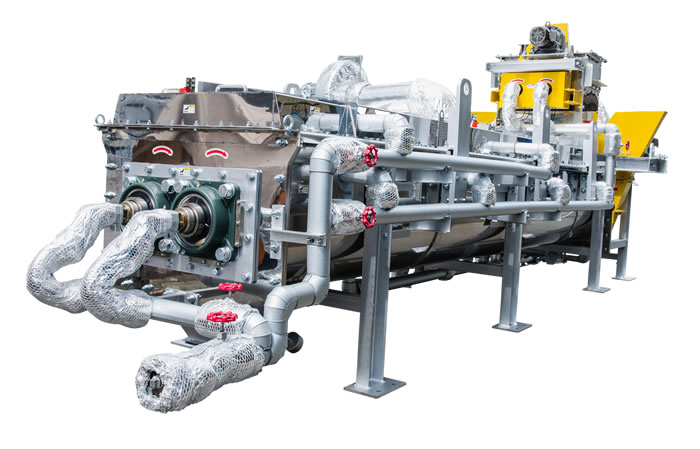
Test case / Turning Wastewater Sludge into Valuable Mineral Resources
Test Results / High-Efficiency Sludge Drying for Precious Metal Resource Recovery
- Material to be dry: Urban mining, Precious metal sludge
- Purpose of drying: Recycling, Reducing industrial waste cost and amount
- Moisture content: 79.2%W.B. before drying, 9.3%W.B. after drying
- Requirements for dryer: Drying is carried out inwards as the dried material is lumpy and heat does not penetrate easily into the interior. To prevent clogging inside the dryer caused by the stickiness and adhesiveness. Automated continuous operation with no operator attended.
Machine cost can be recovered in short term. - Test result: OK


Sludge drying / Brochure
No matter how sticky, adhesive and viscous the material is, KENKI DRYER of International Patent can dry it without clogging inside of dryer and with stable operation that no operational trouble occurs because of its unique mechanism. For example, even materials stuck to the blades of one screw, blades of the other screw in the dryer’s body forcibly peels the materials off as they rotate. Since the blades rotate by peeling the material off each other, any sticky, adhesive and viscous material does not adhere to the blade, and the blades continue rotating, peeling, agitating and heating material without stopping while they carries material further. Also, since surface of blades are always renewed and kept clean, heat near the blades is not blocked and it is conducted directly into the materials.

You must be logged in to post a comment.